When Renae Burress first discovered Global Mentorship Initiative (GMI), she wasn’t simply looking for another volunteer opportunity. She was building the Environmental, Social and Governance (ESG) strategy at Xplor, a startup company with a diverse and globally distributed workforce. It was the height of remote work and she was searching for something many organizations struggled to find: a meaningful way for employees around the world to make an impact together.
“GMI was really the only program I found that could support employees anywhere in the world,” she says.
After convincing Xplor to partner with GMI, Burress went on to introduce GMI to Honeywell, another former employer, helping to grow GMI’s community of partners.
“It’s easy for me to advocate for the program across different employers that I’ve worked with because I’m certain that it will have an impact both on employees as well as students in the community,” she adds.
Today, as Vice President of Diversity & Talent Experience at TruStage, Burress continues to advocate for mentorship—not just because it benefits students, but because she has experienced firsthand what happens when talented people lack access to professional networks.
Though both of her parents were college educated, neither worked in corporate America. As a first-generation corporate professional, Burress remembers graduating without built-in guidance on how to navigate interviews, networking, or landing that first professional role.
“I didn’t have that network,” she explains. “That resonated with me—the focus on supporting students who may not otherwise have someone helping them make that leap from college to career.”
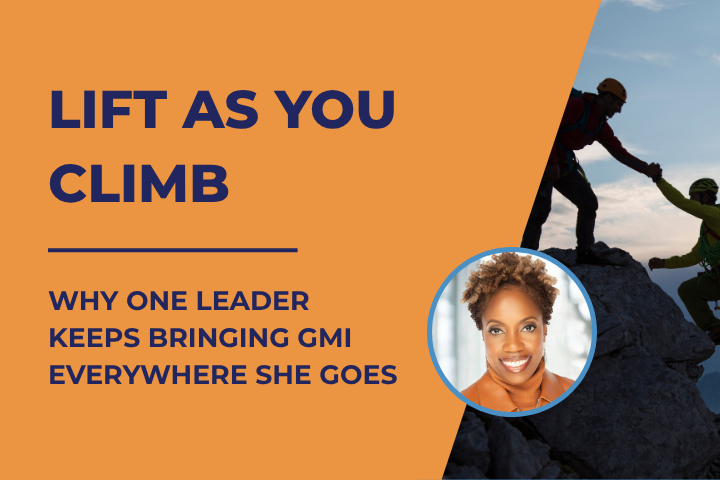
For Burress, GMI’s mentorship model also aligns with her personal philosophy to “lift as you climb,” a lesson deeply instilled in her during formative years as a student at Spelman College, an all-women’s Historically Black College and University in Atlanta, Georgia.
“As I have progressed in my career, I have been mentored by different people. I also provide mentoring to peers and others who are early in their career,” she shares.
According to Burress, a key feature that sets GMI apart is intentionality. The structured mentorship model provides a clear framework that makes mentoring approachable for busy professionals while creating meaningful outcomes for students navigating early career challenges.
“There’s a defined infrastructure,” she says. “Each session has a purpose. It’s easy, meaningful, and impactful at the same time.”
But the impact extends beyond students.
Across multiple companies, Burress has watched employees return to mentor again and again. Some, like Burress, continue mentoring after changing employers. Others describe mentorship as a welcome pause from workplace stress—an opportunity to focus on helping someone else grow.
“The professionals benefit too,” she says. “It becomes this really satisfying experience that improves well-being and perspective.”
Through GMI’s turnkey and scalable mentorship program, any organization can help their employees make a meaningful collective impact.
That combination of measurable impact, employee engagement, and global accessibility is why Burress has repeatedly introduced GMI to new organizations throughout her career.
“GMI has impact and it has results,” she says. “That makes it easy to advocate for.”
Interested in bringing mentorship to your organization? Connect with GMI to explore partnership opportunities.
